

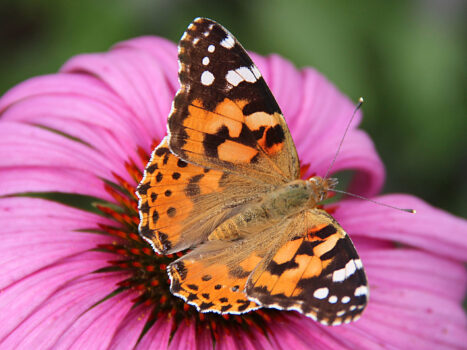
Painted Lady Butterflies
The Painted lady butterfly is known for having “boom years,” when millions appear across the Midwest, including Minnesota. These outbreaks are driven by a combination of weather conditions across several regions, particularly in the American southwest.
Here are the key ingredients to a successful year:
- Wet winters in the deserts of the southwestern U.S. and northern Mexico.
- Warm spring temperatures
- Strong southerly winds in spring can carry huge numbers into the Great Plains and Minnesota.
- A mild, flower-rich spring in the Midwest with plenty of nectar-producing flowers with good rainfall
Population declines often follow:
- Drought in the Southwest.
- Late freezes that kill host plants.
- Strong north winds during migration.
- Extended cold, rainy weather during breeding periods.
Some remarkable Minnesota painted lady invasions have occurred in:
- 2009 (one of the largest on record)
- 2017 (strong but more localized-see video)
- 2019 (major migration across much of North America)
If you’re in Zone 4 in Minnesota, increase your chances of seeing painted ladies by planting nectar-rich flowers. Painted ladies aren’t picky about nectar sources,
- Purple coneflower
- Autumn Joy Sedum
- Bee balm
- Aster
- Joe-Pye weed
Sources:
A Prolonged Migration of Painted Ladies, University of Colorado-Boulder
Painted Lady, Minnesota Seasons
Butterfly Migration and Identification, U.S. Fish and Wildlife Service

Fireflies: Minnesota’s Living Summer Lanterns
There’s something magical about a warm July evening in Minnesota when tiny flashes of light begin to dance across the yard. Fireflies, often called lightning bugs, are among the state’s most beloved summer insects, turning backyards, and meadows into natural light shows.
Fireflies are actually beetles, with more than 2,000 species found worldwide. Minnesota is home to several species. They all glow but each species has its own distinctive flash pattern, helping males and females find one another in the dark.
Nature’s Glow Sticks
The light produced by fireflies is one of the most efficient forms of light in nature. Nearly 100% of the energy is converted into light rather than heat. The glow comes from a chemical reaction involving a compound called luciferin, oxygen, and a specialized enzyme. Scientists continue to study this remarkable process for medical and scientific applications.
Fewer fireflies
In Minnesota, adult fireflies typically appear from late June through July, with activity peaking on warm, humid evenings after sunset. They’re especially common near wetlands, tall grasses, woodland edges, and untreated lawns where their larvae can thrive.
Before becoming glowing adults, fireflies spend one to two years as larvae living in the soil or leaf litter. During this stage, they’re active predators, feeding on slugs, snails, and other small invertebrates, making them beneficial to gardens. Once adults, their flashing patterns are so unique that entomologists can often identify a species simply by watching its light show.
Many longtime Minnesotans remember seeing far more fireflies decades ago. Scientists believe several factors are contributing to their decline:
- Loss of natural habitat.
- Increased outdoor lighting, which interferes with their flashing courtship signals.
- Heavy pesticide use that can kill both larvae and adults.
- Removal of leaf litter and natural ground cover where larvae develop.
A few simple changes can make a difference:
- Reduce unnecessary outdoor lighting during summer evenings.
- Leave some leaf litter or natural areas undisturbed.
- Avoid broad-spectrum insecticides whenever possible.
- Plant native grasses and wildflowers.
- Allow portions of your lawn to grow a little longer.
Fun facts
- Firefly larvae glow, too, although much more faintly than adults.
- Not every firefly species flashes: Some communicate using pheromones instead of light.
- Fireflies are harmless to people. They don’t sting or bite and are wonderful indicators of a healthy environment.
So the next time you’re outside on a warm Minnesota evening, pause for a moment after sunset. Those tiny blinking lights drifting through the grass are also a reminder that even the smallest creatures can create one of nature’s most memorable summer displays.
Sources:
Conserving the Jewels of the Night, Xerces Society for Invertebrate Conservation
Fireflies, Minnesota Seasons
Bringing Back the Dancing Lights in the Minnesota Skies, Minnesota Women’s Network
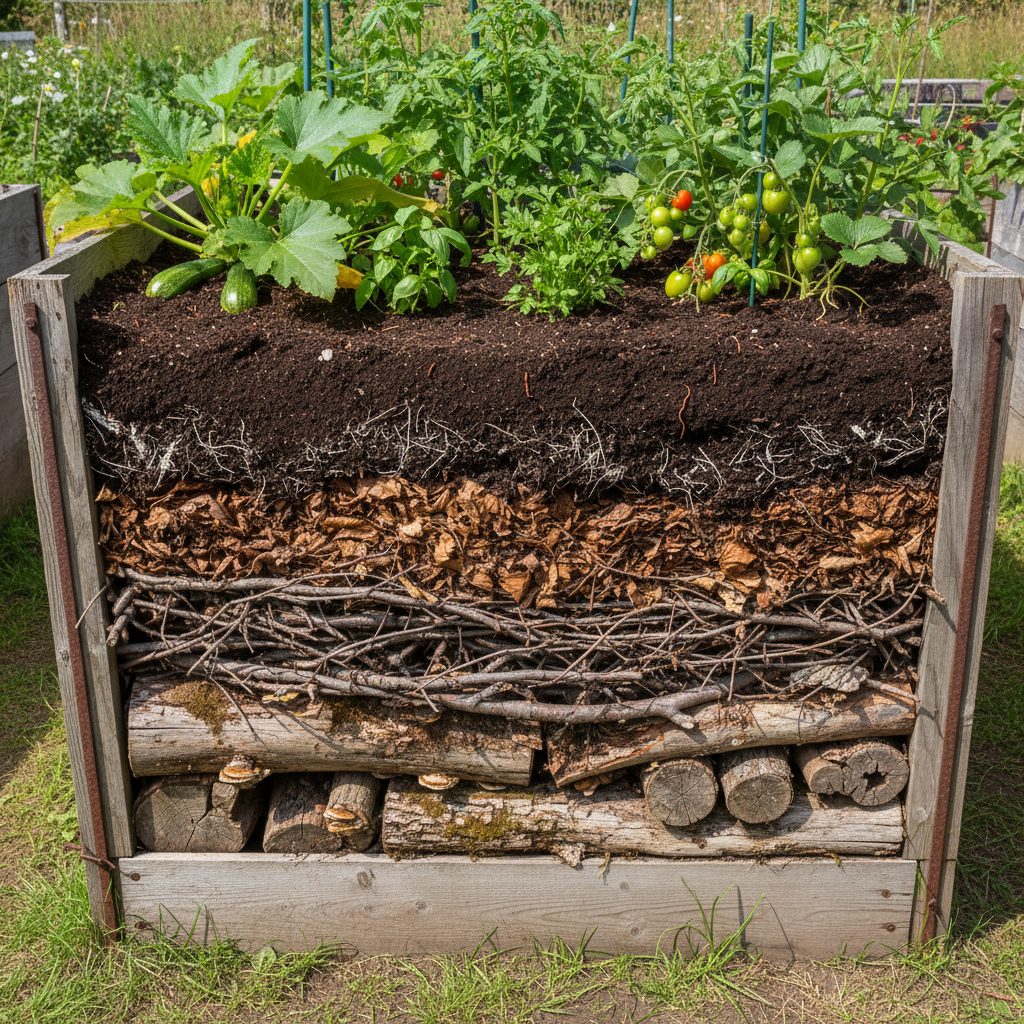
Hugelkultur
Hugelkultur (pronounced HOO-gul-culture) is a centuries-old gardening technique that originated in parts of Germany and Eastern Europe. The name translates roughly to “mound culture.”
The method involves building a raised garden bed by layering:
- Logs and large branches at the bottom
- Smaller branches and twigs
- Leaves, grass clippings, and other organic matter
- Compost
- Topsoil
As the buried wood slowly decomposes, it acts like a sponge, storing water and releasing nutrients into the soil. This creates rich, fertile planting beds that often require less irrigation and fertilizer than conventional gardens.
Benefits
- Conserves moisture by holding water in the decaying wood.
- Improves soil fertility over time.
- Recycles fallen trees and yard waste.
- Provides good drainage while retaining moisture.
- Creates deep, loose soil that encourages healthy root growth.
Things to Consider
- The mound may settle noticeably during the first few years.
- Fresh wood can temporarily tie up nitrogen near the surface, so adding compost or a nitrogen-rich amendment helps.
- Avoid using black walnut or pressure-treated lumber, as they can harm plants.
Hugelkultur works especially well for vegetables, herbs, berries, and flowers. In Minnesota, it’s often best to build a hugelkultur bed in the fall so it has time to begin decomposing before the next growing season. Over time, many gardeners find that these beds become increasingly productive with less watering and maintenance.
Sources:
Hügelkultur: What Is It, and Should It Be Used in Home Gardens? Washington State University Extension
Hugelkultur Meets Permaculture, EcoParent
What is Hugelkulture Gardening? Homes & Gardens
Was this post useful?
Average rating 5 / 5. Vote count: 7
No votes so far! Be the first to rate this post.


