

The Elusive Red Fox
The red fox is a solitary mammal, common across Minnesota, even in the Twin Cities and suburbs. This nocturnal reddish-colored animal is a cousin to the dog and lives in ground dens or brush piles.
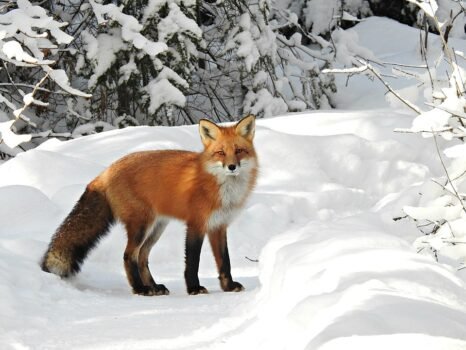
This medium-sized predator is a meat eater. The average size of an adult fox weighs 8-15 pounds, is 15-6 inches tall at the shoulder, about 3 feet in length with a. The fox has a rusty-red coat, white-tipped bushy 13-inch tail, and black legs, ears and nose. Red foxes bark much like dogs, and will sometimes scream when alarmed.
Red foxes mate in February, and 52 days later 5 to 10 young (called pups) are born. The pups nurse for 10 weeks and are fully independent at seven months. Foxes reproduce at age one. Dens are usually found in dense woods. Most dens are quite deep–up to 40 feet. The den, however, is little more than a nursery because foxes prefer to sleep in the open, even during winter.
Like the coyote, the red fox helps to keep the food chain in balance by eating rats and mice, rabbits, ground squirrels, birds, snakes, fish, insects, berries, nuts, and seeds. The red fox is the most common predator in Minnesota. Hunters and trappers harvest up to 100,000 each year, but the fox population remains strong. They compete for space with one of their predators, the wily coyote. See fox footprints below.
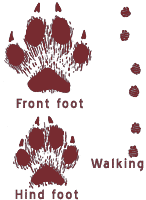
Fun facts: The red fox runs 30 mph, and can leap 15 feet in a single bound–farther than a kangaroo. It is one of the few predators that store food items for future use.
Let us know if you see any fox in your neighborhood.
Source: Minnesota Department of Natural Resources