
Public Pushback Stops Surveillance Partnership
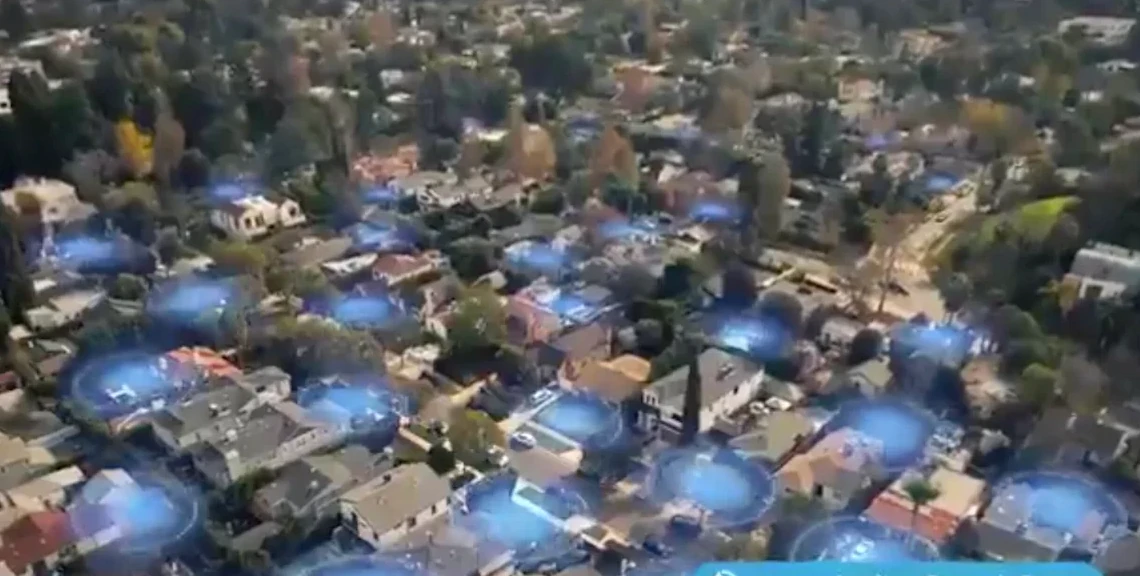
If you saw and were alarmed by the Ring camera ad during the Super Bowl, you weren’t alone. Millions watched as the “Search Party” feature was marketed as a simple way to find lost dogs via a feature of Ring doorbell cameras. Following a backlash over privacy concerns and unwanted surveillance, Ring announce it was cancelling a partnership with the controversial Flock Safety camera company.
Ring and Flock had announced in 2025 that they intended to integrate their systems, allowing law enforcement agencies using Flock to request Ring footage. The integration, however, was never launched, and no videos were shared. By February 2026, both companies officially canceled the partnership.
The episode underscores a broader reality: many citizens are uneasy with around-the-clock surveillance. Opposition to Flock camera systems is growing nationwide, including here in the South Lake area. Flock has grown so rapidly by getting its foot in the door via law enforcement agencies selling safety and another method of solving car thefts, lost kids, etc. Residents often know very little if anything about the decisions made to install the cameras. And yet, this is all paid for with your tax dollars.
If you share the concerns of millions of others, make your voice heard with your elected leaders.
Source:
404 Media
Scripps News Service
Read:
Flock Surveillance Cameras: What You Should Know, SCA (2026)
A Few Loud Voices, SCA (2026)
Automated License Plate Readers: A Resident’s Concern, SCA (2025)
Automated License Plate Reading Comes to Town, (SCA 2025)
Flock in the news
Regional Trail: Removing Ash, Restoring Resilience
Users may have noticed significant tree removal along portions of the Lake Minnetonka Regional Trail in Shorewood. The work is part of a countywide effort to remove unsafe trees and strengthen the long-term health and resilience of the tree canopy.
The Hennepin County Regional Rail Authority (HCRRA) identified approximately 13,000 ash trees along 55 miles of trail corridors, most of them small in diameter and expected to become infected within the next decade. Rather than wait for decline and safety hazards, HCRRA is being proactive with removal. Smaller ash trees (1–6 inches in diameter) are prioritized because they are less costly and easier to remove before they become dangerous.
As trees are taken down, forestry staff is planting tubed seedlings and larger saplings to restore canopy cover and improve ecological diversity and resilience along the corridor. The Shorewood work is being done by Hiawatha Tree Service.
This work is part of a broader county tree management plan that includes updating the tree inventory and removing hazardous trees along streets and other public areas. Funding from a Minnesota Department of Natural Resources bonding grant, along with additional state and federal sources, supports both removals and replanting. The goal is a healthy, diverse, and stable tree canopy for the future.
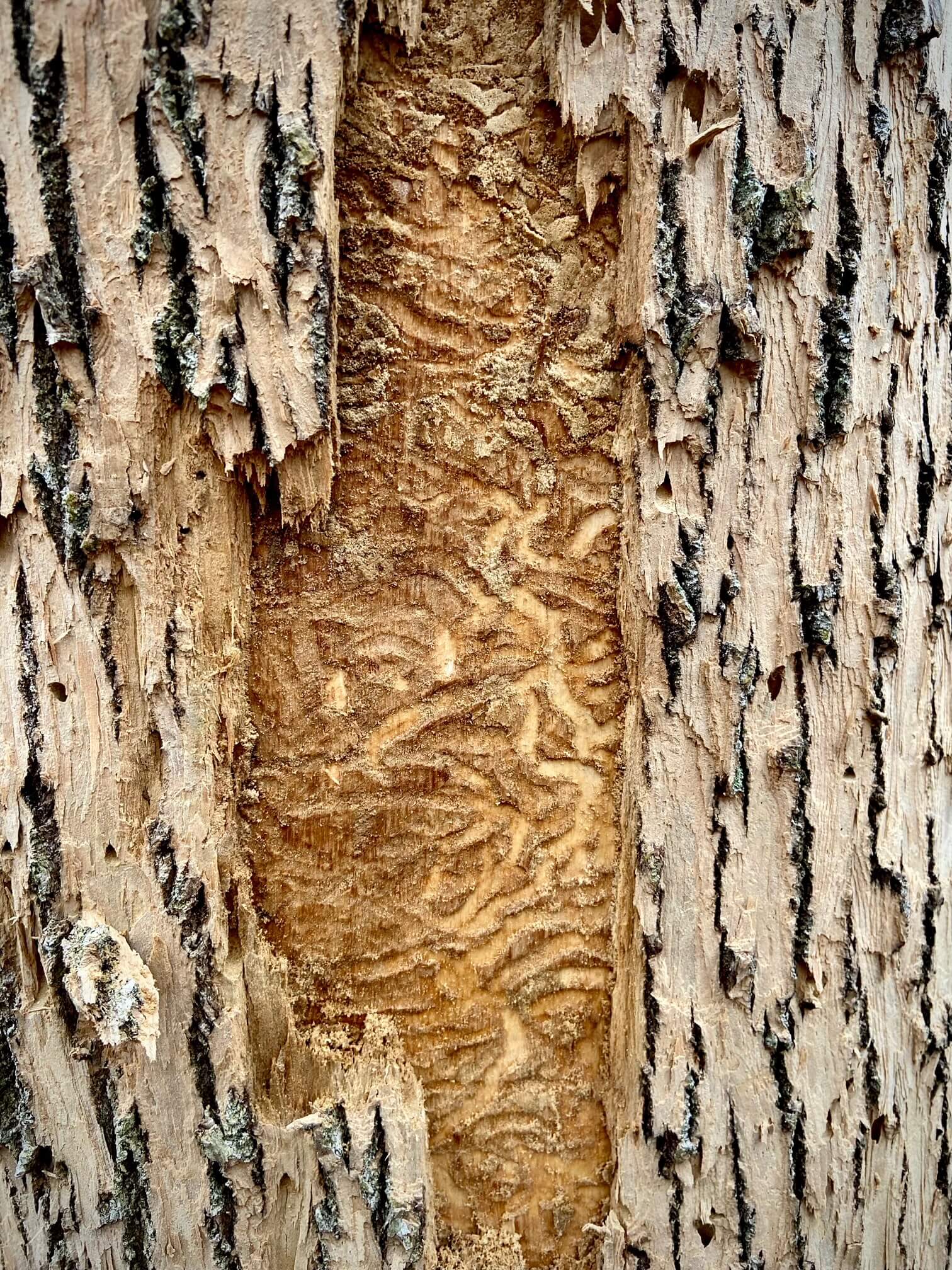
| Ash Borer factoid: Ever wonder what attracts the insect to ash trees? The ash trees produce “tree volatiles,” airborne organic compounds released for defense, communication, and environmental interaction. The beetles use senses to detect the volatiles which act as a beacon to locate, land on, and feed, causing fatal damage to the tree. |
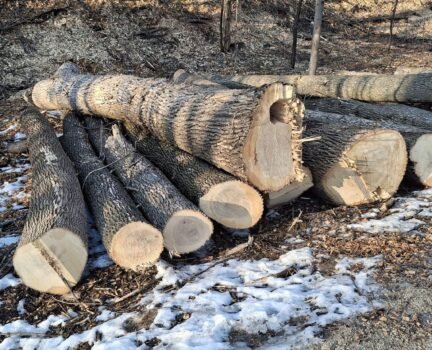
Below: Logs measured and staged for milling.
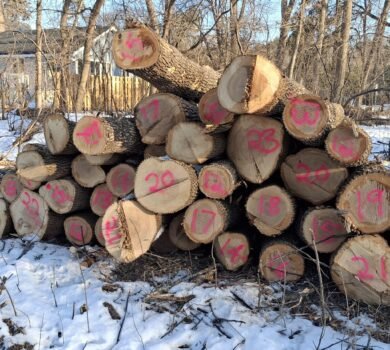
Source: Hennepin County Regional Rail Authority
Read:
Regional Trail: Ash Borer Brings About Change, SCA (2025)
Lake Minnetonka Regional Trail, SCA (2025)
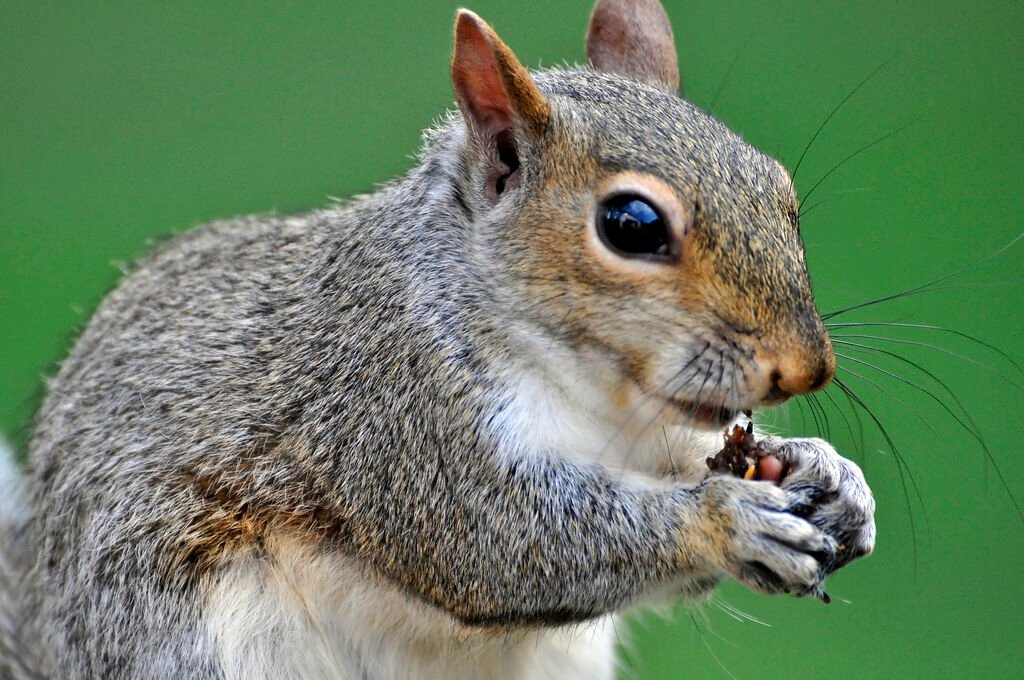
Backyard Bandits: The Relentless Grey Squirrel
The Eastern gray squirrel may look like a twitchy puffball with a bushy tail, but in the suburbs it’s a fur-covered conniver. Mature trees and a bird feeder make a five-star buffet with valet parking. Feeders become puzzles waiting to be solved.
Squirrels can launch off railings, shimmy down poles, and chew through plastic. In bad weather, that fluffy tail becomes a built-in blanket and umbrella, shielding them from wind and rain.
Naturally, they feast on acorns, walnuts, berries, buds, and fungi. Suburban living upgrades the menu to sunflower seeds, corn, suet, and whatever snack humans leave behind. In fall, they bury nuts in scattered caches, relying on memory and scent to recover them. The forgotten ones sprout into trees, making squirrels accidental, if chaotic, foresters.
They mature quickly and can raise two litters a year, keeping numbers steady. Hawks, owls, foxes, coyotes, dogs, cats and humans all hunt them. Their agility and intelligence keep their population thriving.
Backyard squirrel maze. Watch below.
Was this post useful?
Average rating 0 / 5. Vote count: 0
No votes so far! Be the first to rate this post.